
Devices & Resurfacing · Buckhead, Atlanta
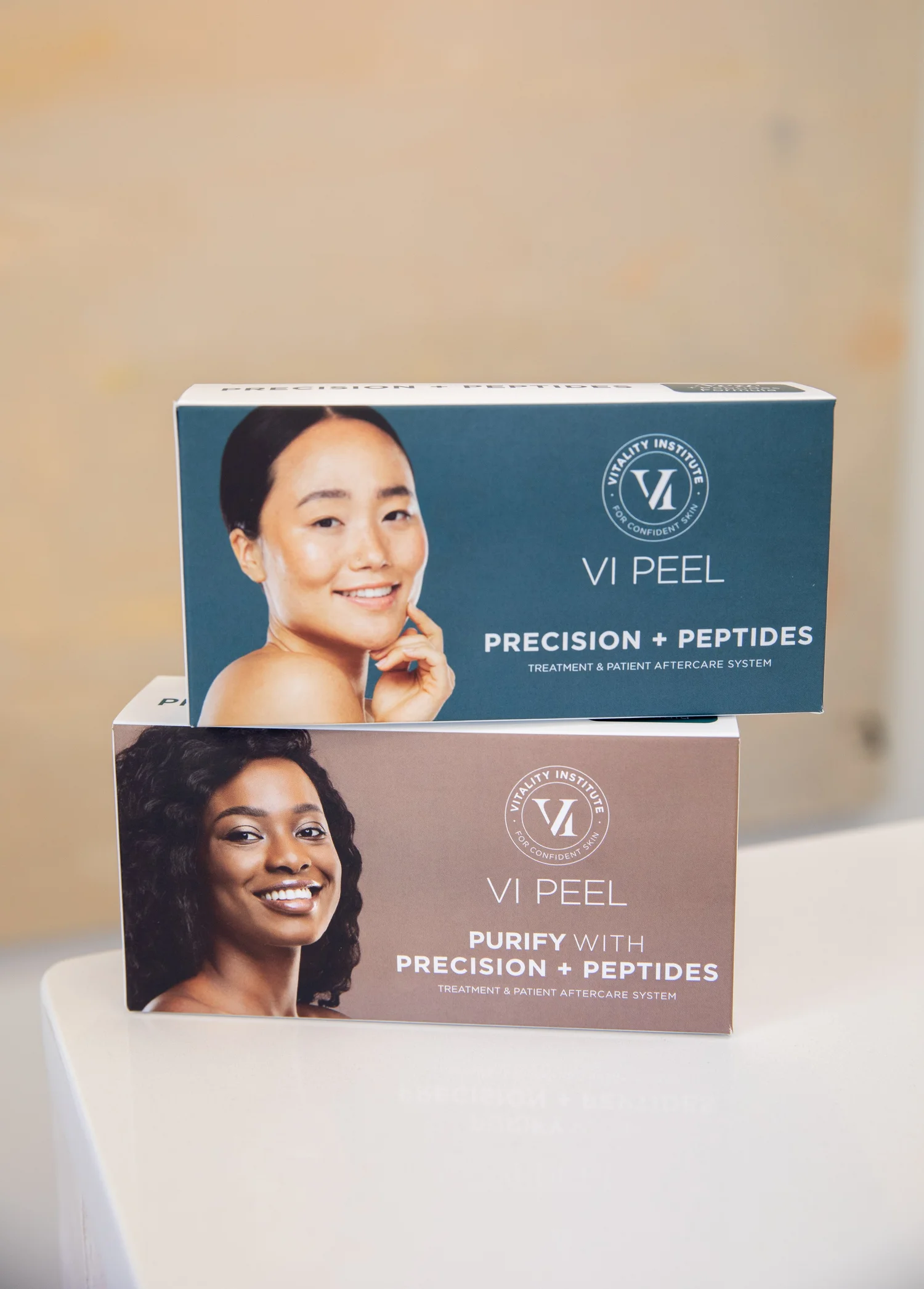
The short answer: A chemical peel lifts away the damaged surface layer of skin so the fresher layer underneath can come through — more even tone, softer texture, fewer dark spots. You can have one any time of year with the right sun protection. We especially love them in the fall, because after an Atlanta summer there's usually plenty of sun damage sitting on the surface, and this is when we get to clear it.
What a peel actually does
A chemical peel removes the damaged surface layer of skin so the newer layer underneath can come forward. That's it. The skill is in choosing the right strength for your skin and your goals, which is the part that makes this a medical treatment rather than something you buy in a bottle.
What people tend to notice afterwards: more even tone, softer texture, fewer visible dark spots, and makeup sitting better.
What an Atlanta summer leaves behind
You can wear SPF every single day and still come out of a Georgia summer with uneven pigment. Heat, humidity and months of cumulative exposure add up, and it usually turns up in September and October as patchiness rather than anything dramatic like a burn.
Clearing that is exactly what a peel is good at, and it's why so many of our patients come in for one around this time of year.
Can you get a peel any time of year?
Yes. This isn't a treatment with a season. Your skin is more sensitive to sun for a little while after a peel, so the aftercare matters — daily SPF and no direct sun while you heal — but that's as true in April as it is in October.
What makes fall our favorite isn't a rule, it's timing. Summer is when the damage accumulates, fall is when it surfaces, and clearing it now means heading into the holidays looking like yourself.
One peel or a series?
One peel gives you a visible reset. A series — usually three, spaced a few weeks apart — is what shifts pigment and texture in a way that holds.
If the holidays are your goal, now's a good time to start. Three sessions spaced a few weeks apart lands you right around December. Starting later is completely fine, you'll just be finishing later.
What to expect
Expect some redness and a few days of flaking, depending on the depth of your peel. Your provider will tell you exactly what your skin is going to do, because that depends entirely on which peel you're having.
Afterwards: no direct sun, SPF every day without exception, and no retinol until your provider gives you the go-ahead. Good medical-grade skincare is what protects the result once the peel has done its part.
Quick FAQ
How much downtime?
Anywhere from none to about five days, depending on the depth. We'll match the peel to what your week can handle.
Can I get a peel in the spring or summer?
Absolutely. Peels work year-round. You'll just want to be diligent about sun protection while your skin is healing, and we'll walk you through exactly what that looks like at your appointment.
Can I have a peel if I have melasma?
Often yes, but it needs a provider who knows what they're doing — the wrong peel can make pigment worse. Come in and let us take a look.
How soon before an event?
At least two weeks for a medium peel. Don't book a peel the week of a wedding.
Peel or microneedling?
Peels work on tone and pigment. Microneedling works on texture and scarring. Plenty of our patients alternate between the two.
Results vary. All treatments at Skinship are performed by licensed medical providers at 480 E Paces Ferry Rd, Suite 9, Buckhead, Atlanta.
